Why protein-per-calorie is the number that matters
All food fills you up a little. Protein fills you up the most per calorie, burns the most calories in digestion (20–30% of protein calories are spent processing it), and protects your muscle while you lose fat. When you're in a calorie deficit, every 100 kcal has a job to do — the question is how much protein each 100 kcal buys.
The leaderboard (protein per ~100 kcal)
Elite tier: 18–25 g per 100 kcal
- Egg whites — 11 g protein per 50 kcal. The purest protein in the supermarket.
- White fish (cod, haddock) — ~22 g per 100 kcal, and a big fillet is barely 120 kcal.
- Shrimp/prawns — ~23 g per 100 kcal. Cocktail-party food that out-proteins a protein bar.
- Canned tuna in water — ~25 g per ~110 kcal, costs pennies, needs zero cooking.
Everyday tier: 12–18 g per 100 kcal
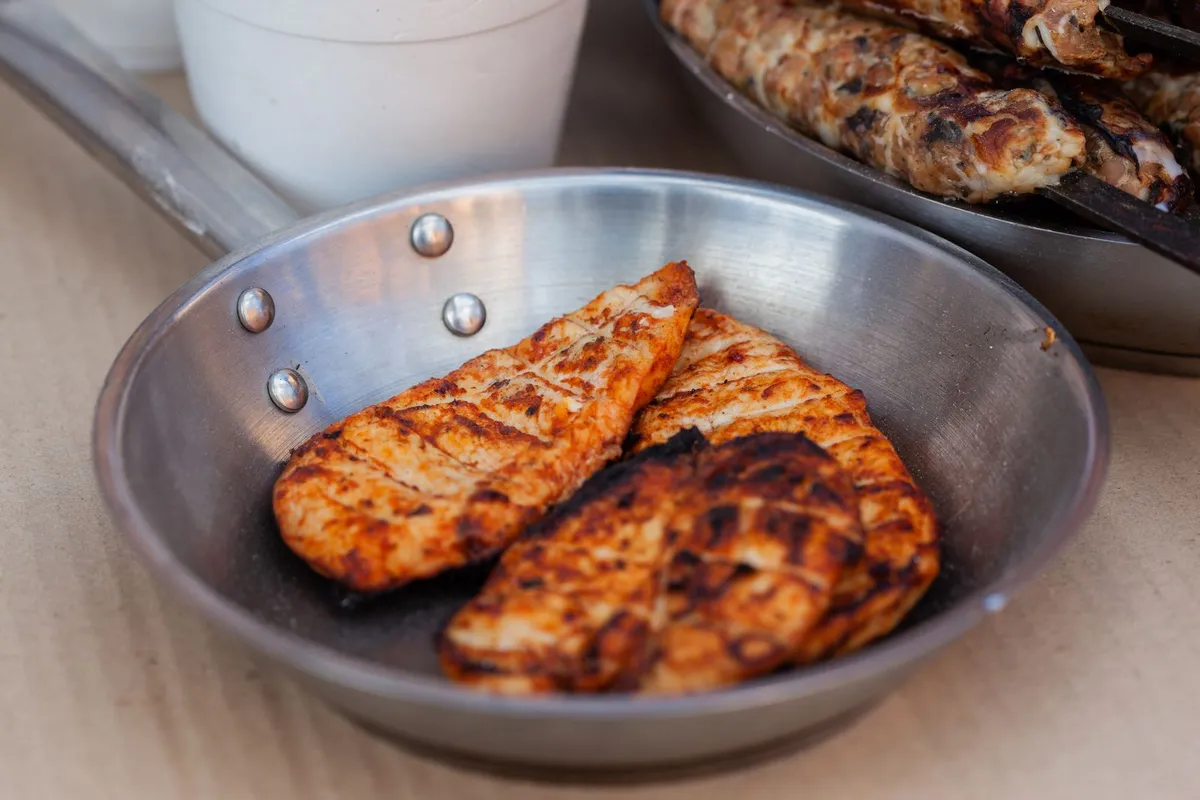
- Chicken breast — ~31 g per 165 kcal. The default for a reason.
- Fat-free Greek yogurt — ~10 g per 60 kcal, and it works at breakfast, snack and dessert.
- Cottage cheese — ~11 g per 80–100 kcal. The 1970s were right about this one.
- Lean turkey mince — ~27 g per ~150 kcal; makes chili, bolognese, burgers.
Honorable mentions
- Whole eggs — 6 g per 70 kcal; less protein-dense but nothing beats them for satiety-per-effort (full egg numbers here).
- Tofu & tempeh — ~10–19 g per 100–190 kcal, the plant-based workhorses.
- Protein powder — ~24 g per 120 kcal. Not food exactly, but it plugs the gap on rushed days.
Rule of plate: anchor every meal on one item from the elite or everyday tier, then build around it. Three anchored meals gets most people to 90–120 g before snacks even start.
What this looks like on a real day
Greek yogurt with berries at breakfast (20 g), a chicken salad at lunch (35 g), cottage cheese as the 4pm snack (14 g), salmon and rice for dinner (38 g) — that's 107 g of protein for roughly 1,400 kcal, leaving room in most budgets for the bread, the fruit and the biscuit that keep life livable. Compare that with a pastry-toast-pasta day: same calories, maybe 45 g protein, and hungry by 9pm.
Tracking it without weighing chicken forever
The old way was a food scale and a database. The current way is a photo: Calfit's AI scanner reads the plate, estimates the protein along with calories, and fills your macro rings as you go. When the protein ring is behind at 5pm, dinner picks itself — and if you ask Pip's coach "what should I eat?", it already knows you're 40 g short.